
The Shape of Time
On clocks, capitalism, and why modern life feels shorter even as we live longer
Do we have time?
Of course not. We never had time. Even when there was nothing to do, humans found a way to invent urgency. In the ancient world, time was dictated by the sun and the seasons. You planted when it was warm and harvested when it was cooler. The rest of the year, you were bored or drunk or telling stories around fires. There were no unread notifications in Mesopotamia. No one in Harappa opened their clay tablet in the morning to discover 243 pending tasks.
Then clocks arrived. The Benedictine monks of the Middle Ages built mechanical devices to regulate prayer hours. They believed they were mastering time, but really they were sowing the first seeds of anxiety. Capitalism soon adopted the clock. Factories were designed around it. Workers became measurable units of productivity. That was when we stopped living in time and began living against it.
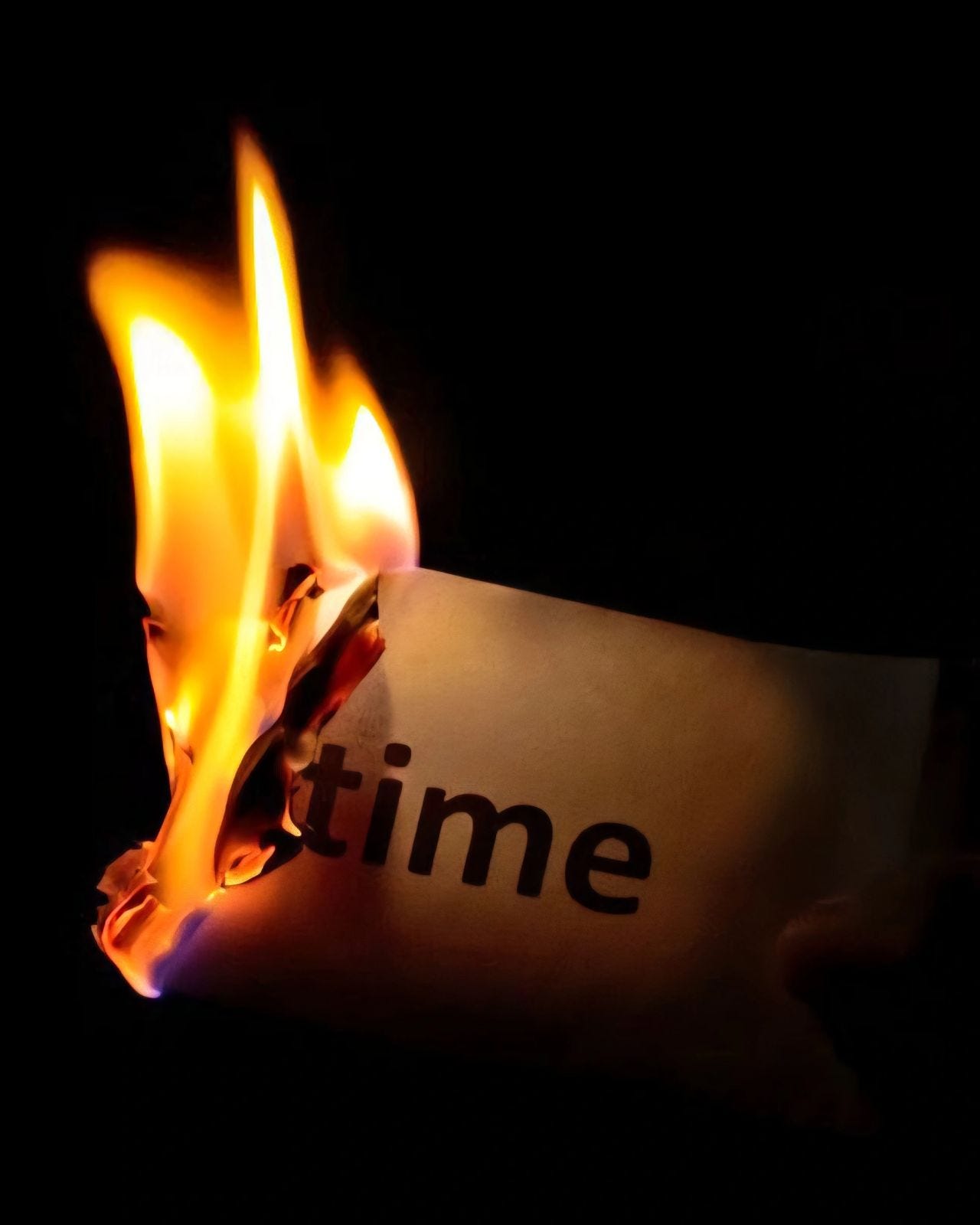
Every technological leap since then has promised liberation. The washing machine would free housewives. The car would free commuters. Email would free office workers. Instead, each innovation merely changed the shape of the cage. The washing machine gave us television, which filled the saved hours with new obligations to be entertained. The car created suburbs, which lengthened commutes. Email became WhatsApp, which became a relentless chorus of notifications pretending to be collaboration. High-speed internet gave us remote work, which cleverly converted our bedrooms into offices without even offering rent.
Time became fragmented. The Industrial Age made us punch in and punch out. The Digital Age made sure we are always punched in. Our lives are now a mosaic of partial attention. Every app wants five seconds of your day. The combined demand of these five-second distractions is your entire life.
The irony is that humans are living longer than ever before, yet we feel perpetually impoverished. There is more time inside the human lifespan, but less inside a human day. We have the same 24 hours as a 10th-century farmer, but the farmer did not spend four of them deleting promotional emails or doomscrolling through the misfortunes of strangers. He lived inside longer silences, slower afternoons. His boredom was a privilege we have lost.
So, do we have time? On paper, yes. In reality, no. We invented civilizations to control nature, then invented technology to control civilization, and now we open time-tracking apps to control ourselves. We meditate with timers. We schedule playdates with our own children. We outsource spontaneity to travel companies that promise "authentic experiences" between 3:30 and 5:15 PM.
Time today is no longer a river or a road. It is a hostage we negotiate with. We keep asking for just a little more. It keeps charging interest.
Very beautifully articulated. It reminds me of a famous dialogue from the film Anand, where Rajesh Khanna says " Babumoshai, zindagi ko lamba nahi, bada banana chahiye". Unfortunately as you rightly pointed, aadmi waqt ka gulam hai.